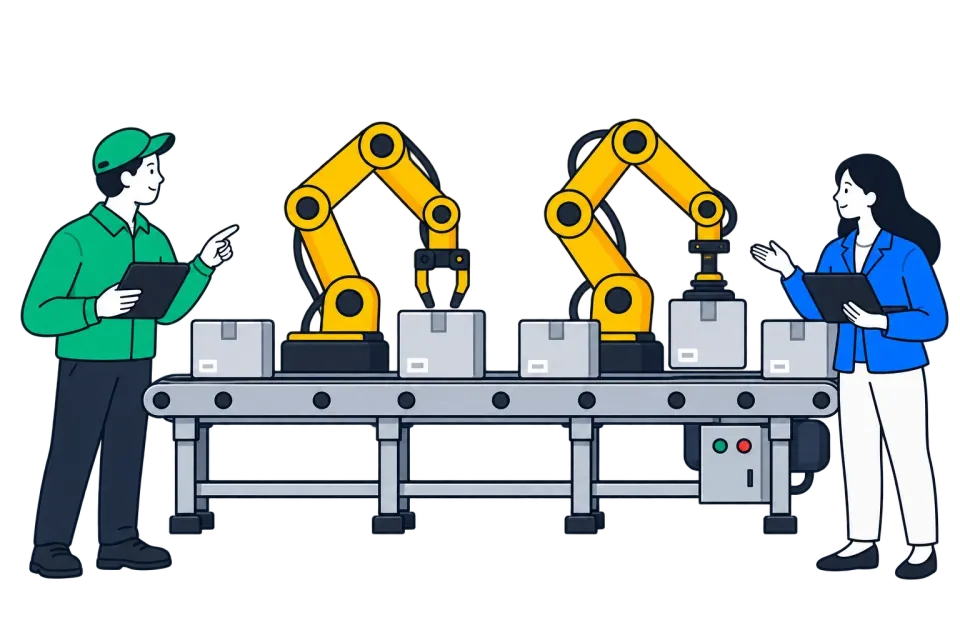
Your factory is more than its production line.
Orders, purchasing, schedules, machines, operators and suppliers all shape what happens on the floor. Quindart connects the information behind those decisions, checks it against daily work and helps you decide what is worth automating.
Discuss your operation
We start with the information behind production.
Business systems record what the factory has promised, which materials it expects and how decisions move. We trace those records while speaking with planning, purchasing, maintenance and operators. The gaps between the formal process and daily work are part of the investigation.
How software and integration fit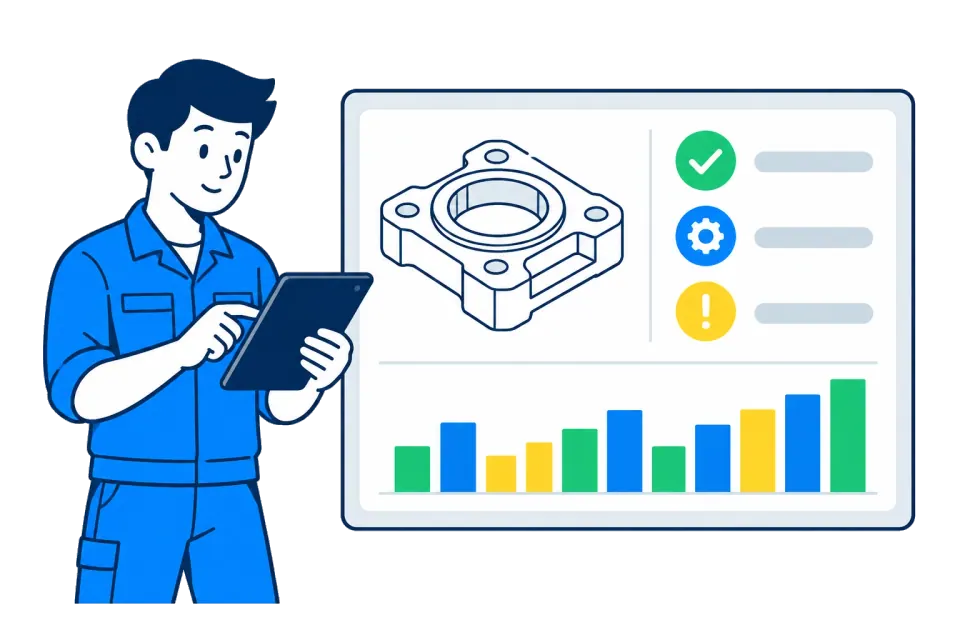
Observe
Understand business goals, people, decisions and constraints. Check the records against work on the floor.
Connect
Trace relevant information through orders, purchasing, schedules, ERP, CRM, spreadsheets and communications.
Model
Make dependencies, ownership and recurring exceptions visible while keeping uncertainty explicit.
Prioritize
Compare the value, feasibility and risk of changes to information, workflows or equipment.
Automate selectively
Implement a justified software connection or physical pilot, linked to its operating context.
Operate and revise
Define monitoring, maintenance, recovery and human authority as the factory changes.
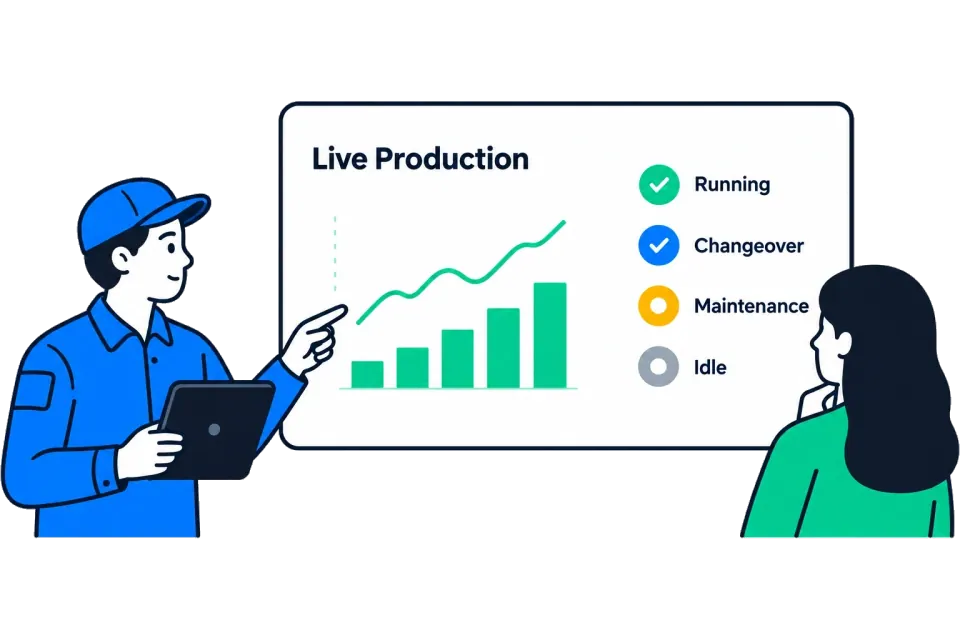
Give leadership a useful view of what needs attention.
A changed customer order can affect purchasing, scheduling and release on the floor. When the relevant information is scattered, leadership has to keep asking for updates. The aim is to make important exceptions, ownership and available choices easier to see, without adding another dashboard that needs constant explanation.
Factory complexity does not disappear. Better information and appropriate automation should help teams handle routine coordination while keeping consequential judgment and escalation visible.
Equipment follows a defensible operating case.
From Hong Kong, we can compare equipment options from Chinese manufacturers once the requirements are clear. First establish the constraint, information interfaces, human involvement and recovery responsibilities. Then decide whether a physical pilot is justified and what it must demonstrate.
Where equipment sourcing fits
Experience in connected operations.
Our published cases document software integration and specialist workflows. They are not presented as completed factory automation installations.
Read the software cases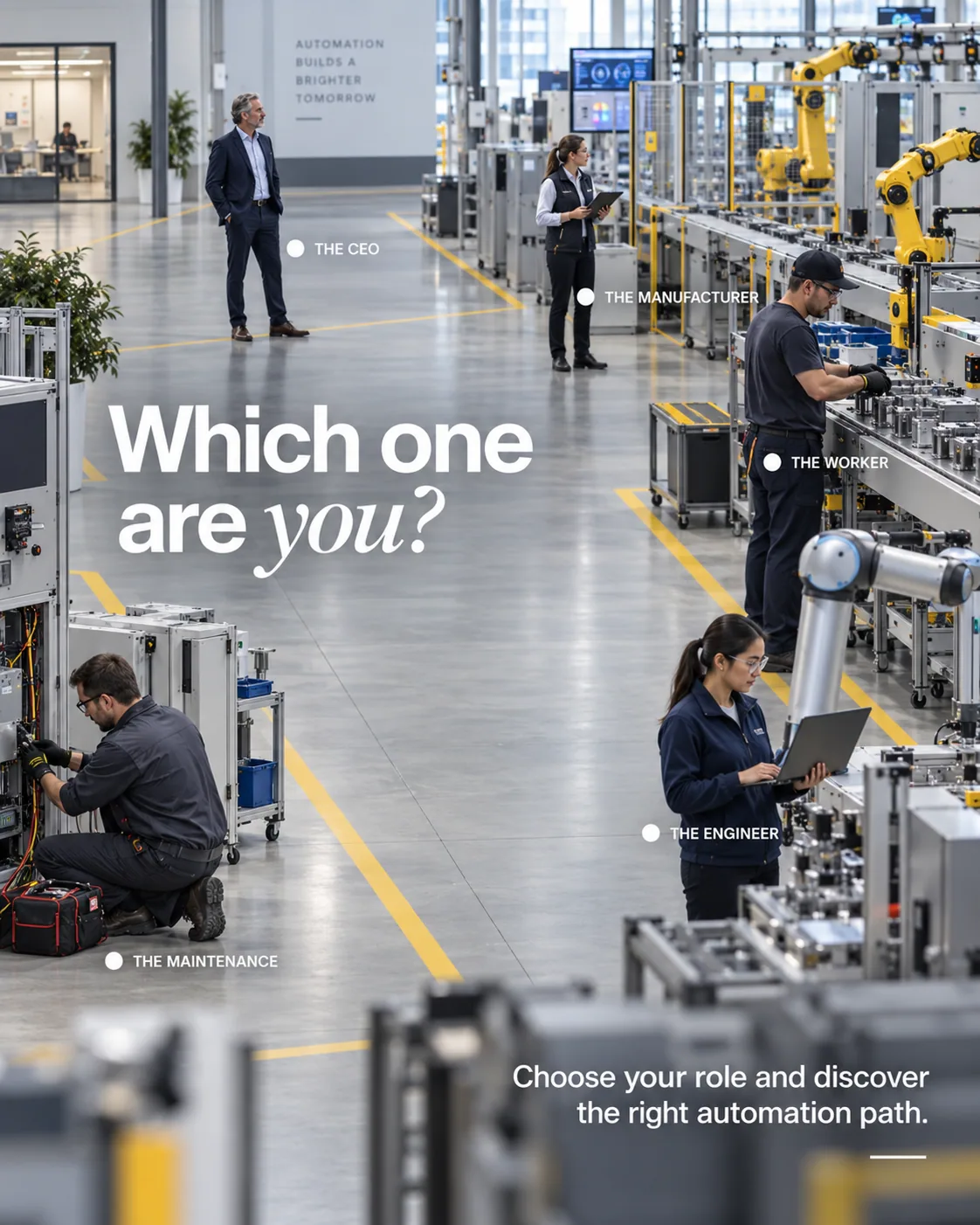
What does the operation look like from your role?
Knowledge is spread across the business. Choose your role and tell us which decisions, handoffs or exceptions need attention.
Connect what the business promises with production reality.
Follow orders, purchasing, schedules and exceptions across departments before deciding what should change.
Continue as Manufacturer
Built around real work.
Badissy Ayman
Founder & CEO
Quindart begins with the information and human decisions behind production. We connect relevant systems, examine recurring exceptions and help teams choose interventions they can operate and revise.
Discuss your operation →Tell us what keeps the factory on your mind.
Tell us about recurring delays, handoffs, exceptions or decisions that depend on chasing information. You do not need a machine specification or a technical answer before contacting us.
Discuss your operation